Posts

When No Communication is Best: Speed Skating, Morphine Overdoses and the Wings Fall Off Button

Image
Very often I advise people how to communicate their messages more effectively, but there are some cases where the best idea is not to communicate anything at all but to design a product, process or system so that the message is not necessary. Intuitive user interfaces, for example, mean that you don’t need a user’s manual, and safety interlocks eliminate the need for warnings. Occasionally, though, people go to the other extreme and design their solution so that without very robust communication some errors are very likely. I call these design flaws “wings fall off” errors in honor of the classic Gary Larson cartoon showing someone sitting in an airplane fumbling for the recline button and touching instead the “wings fall off” button, unwittingly causing a disaster. We laugh because no airplane designer would even have a “wings fall off” button and it certainly wouldn’t be next to the recline button*. But in many real life cases people do exactly the same thing, designing consequences ...

“Snotmarks”: The Curious Practice of Registering Offensive Trademarks

Image
You might think that the trademark database search page of the United States Patent and Trademark Office might be a bit dull -- it certainly looks so – but if you try typing in certain words that you think cannot possibly be trademarks then you make an interesting discovery. Not only are words like snot, piss and asshole all registered trademarks, they have all been registered dozens of times and clearly with deliberate intent. I discovered the USPTOs little secret a few years back when a customer called to ask how he could register a product name he had thought of. First, I explained, we google it just to make sure that there are no obvious conflicts, then I ask my network of contacts around the world to make sure it doesn’t sound offensive anywhere. After that it goes to the trademark lawyers for a formal search. I asked what name he was thinking of. “Twat”. For the benefit of non English speakers this is not a nice word and I explained this. “Are you not allowed to register not n...

If Fish Could Draw II: Reflecting Spheres and the Search for Old Paintings

Image
In September 2009 I blogged about how the limitations of one media often drive creativity in another ( If Fish Could Draw , 28 September 2009). One of the examples I gave was the art of Catarina Kruusval , whose illustrations are sometimes drawn with distorted verticals and perspective like the view from a fisheye lens. I am still convinced that she was inspired by wide angle lenses but it turns out I was rash to say that this view had never been seen until such lenses were invented. Artists have, in fact, been looking at this kind of perspective since they first made metal spheres shiny enough to reflect a wide angle image. There is a famous picture of MC Escher holding a shiny sphere in his hand and observing the reflected image; he used this sphere in the 1920’s and 1930’s to make woodcuts and lithographs where he was at the center. I will be very surprised if nobody thought of this before Escher. One earlier example is a photograph taken in 1910 by an unknown amateur...

When it’s a Good Idea to Use the B Word: Two Simple PR Lessons from the Nestlé Baby Milk Saga

Image
Preparing for a lecture about how a PR crisis can become “chronic” I have been fact checking some case studies such as the long running “Nestlé Boycott”. This case is very interesting in many ways, but today I have noted two apparently trivial details that are instructive for anyone who is creating content for websites, blogs and social media. My first step in research is often to google the topic and the search string I chose for the first attempt was “nestle boycott” – a fairly obvious choice. Scanning the results I noted that this search locates all the content produced by the boycott campaign -- www.babymilkaction.org for example -- and the helpful Wikipedia page but it does not find any response from the Nestlé company. By searching the company website very diligently I was able to find at least one document that includes what is effectively a company response -- buried in a 1999 speech at http://www.nestle.com/MediaCenter/SpeechesAndStatements/AllSpeechesAndStatement...

Seven and a Half Things to do When Someone Asks You to Deliver Their Presentation

Image
When I coach people in speaking and presenting skills I always ask what they need to know about and especially what they fear the most. Pretty consistently the nightmare of most people is having to present something that someone else has prepared. These are mostly people who are already confident presenters of their own material but they dread being handed a pile of possibly poor quality slides and having to stand up and present them. Fortunately there are some tried and tested methods for dealing with this problem and I have distilled them into a quick checklist of seven and a half things to do. I hope this helps you one day. CHECKLIST:   Seven and a Half Things to Do When Someone Asks You to Deliver Their Presentation 1. CONSIDER SAYING NO . Say no when there is no advantage to you, but consider benefits to relationships and career if you accept. 2. TALK TO THE AUTHOR . Talk with the creator of the presentation even if they have only a few minutes....

The Only Certain Prediction for the Next Decade: All Forecasts Will be Wrong

Image
As we approach the end of a decade once again the media have begun the tiresome review of the past ten years. Try as you might you will not find a newspaper or TV schedule that doesn’t feature some sort of overview of the noughties. Some, perhaps unwisely, are also essaying some predictions for the coming decades – the “oneties” I call them for the lack of a better name (the word comes from my three year old son who said onety-one, onety-two instead of 11 and 12 when he was smaller). Normally I would not add to the confusion, but this year I have decided to share with you the only prediction you will ever need. Cut this out and paste it to something everlasting like a pyramid where you can always find it: All Predictions Will Be Wrong. Why is it that predictions about the future are always so wrong? I believe that there are three fundamental mechanisms: 1. Underestimating the dominance of momentum: the Trains & Planes Case . Browsing through old books and magazines you will often ...

Mutant Facebook Groups: Yet Another Social Media Hazard You Need to Know About

Image
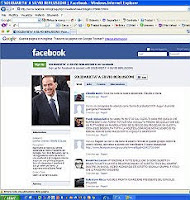
Every time I read some PR maven forecast that social media spells the end of PR I always laugh. Far from putting flacks out of work, social media tools like Facebook and Twitter actually create more work, generating or adapting content, monitoring and watching out for hidden dangers. Communications professionals in the old days never had to worry about domain name or typo squatting, and they didn’t have to worry about fake Twitter accounts in their name. And they certainly didn’t have to worry about Mutant Facebook Groups . This is a new danger where someone creates a new Facebook group with some generally acceptable scope, such as “Keep Facebook Free”. Then, when millions have signed up, the administrator changes the group name and description to something like “Let’s Eat Human Flesh!”. Can’t happen? Yes it can and it did this week. A person or persons unknown created a number of groups in Italy with titles like “Support the Victims of the Abruzzo Earthquake” and “Support Made in Ita...